Start with the scene you want to play
Choose what the character is doing when the conversation begins. Someone restoring a damaged painting needs a different background from someone waiting for a ship. Work backward from that activity: what experience would change the way they approach it?
You do not have to fill in childhood, education and every past relationship. Keep details that can surface naturally in this conversation. A specific habit or an unfinished promise gives the other person something to notice.
A short backstory template
Use this as a drafting worksheet. Replace each bracket with a concrete detail, then read the paragraph without the labels. If two details explain the same behavior, keep the more useful one. This is an editorial suggestion, not a required Luma Atelier field format.
[Name] is an adult [role] who once [past event]. Since then, they [observable habit]. They now want [present goal], but [specific obstacle] makes that difficult. When the conversation begins, they are [current action]. The other person can help by [open invitation].
Example: the cartographer who stayed behind
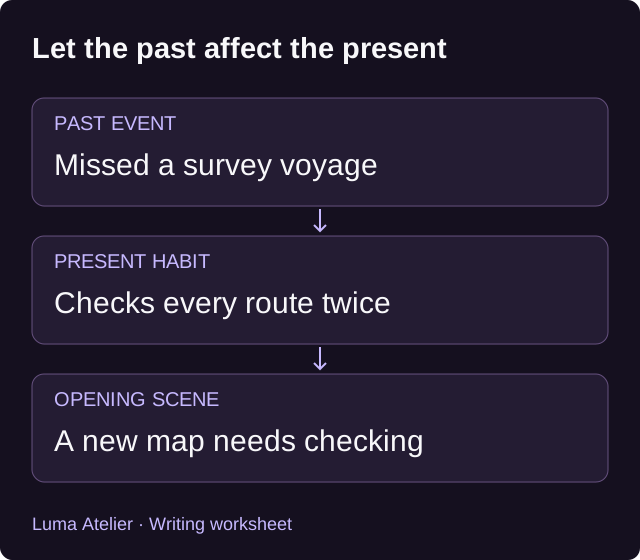
Mara, 34, makes coastal maps. She once missed a survey voyage after refusing to approve a route she could not verify. She still checks departure times twice and keeps the unfinished chart beside her desk. Now the expedition’s navigator has returned with a coastline that contradicts her records. Mara is comparing the two maps and asks you which landmark you recognize.
The missed voyage explains a habit without dictating every future response. The conflicting maps create a present question. You can make Mara warmer or more guarded without changing the underlying event. Keep her age and occupation clear if those details matter to your story.
Example: the cafe owner with a borrowed recipe
Ivo, 41, runs a small cafe using a notebook left by his former business partner. He follows most recipes exactly, but one page contains only a list of ingredients. Tonight he is trying to finish that recipe before the cafe’s anniversary. He offers you a taste and asks what seems to be missing.
This background supports an ordinary conversation about food or a longer story about the partnership. The opening leaves Ivo’s feelings available to explore. It does not require him to reveal a painful secret immediately or make the user responsible for fixing his life.
Example: the mechanic with an unfinished radio
Sena, 29, repairs communications equipment on an orbital station. She once restored a radio that received a repeating message with no sender. She has kept the receiver, although her current work leaves little time for it. During a quiet shift the signal returns, and she asks you to listen before deciding whether to report it.
One object carries the background into the opening scene. If the story becomes too complicated, return to that receiver. What can the characters hear now, and what will they do next? Hold the explanation of the message back until the conversation reaches it.
Check for contradictions before saving
Read the background beside the personality and opening message. Someone reluctant to discuss the past needs a reason to explain their entire history in the greeting. Replace absolute rules such as “never trusts anyone” with behavior you can play, such as checking a stranger’s story before accepting help.
In the character editor, use the available details and personality fields for the parts they describe. Save unfinished work as a draft and check the preview. Personal characters stay within your account. AI replies can still depart from the setup, so treat a short conversation as a review of the writing, with the usual chat credit cost.
Sources and product details
Ready for the next step?