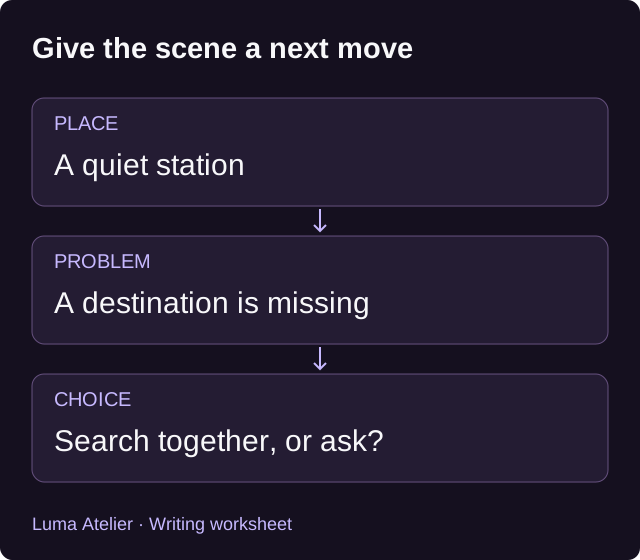
Choose the kind of evening you want
For a quiet chat, pick a small problem: a closed cafe or a telescope that needs adjusting. For an adventure, give the characters a deadline or a destination. You can keep the stakes low and still have a reason to reply.
Tell the character your preferred tone in plain language. You might ask for a gentle mystery, short replies and space to choose your own actions. These are requests to the model, so read each reply and correct the scene when it drifts. A prompt cannot guarantee that every response follows your instructions.
A delayed train
Two adult travelers are waiting at a nearly empty station. One has a ticket with a destination absent from the departure board. Start with curiosity: does the other traveler recognize the place? The next turn can lead to a shared search or a conversation about why each person is traveling.
The board has changed again, but my stop still is not there. I turn the ticket toward you. "Have you heard of this place, or have I booked the strangest trip of my life?"
A book with someone else’s note
At a secondhand bookshop, you discover a handwritten correction in a travel guide. Your companion recognizes the handwriting. Ask what the correction means and let the answer establish the mystery. Avoid deciding in your opening that the companion is guilty or already trusts you.
The observatory’s last visitor
An astronomer is closing the observatory when you arrive with a sketch of an unfamiliar constellation. The sky is cloudy. You can compare the sketch with a map indoors or wait outside for a break in the weather. A shared task gives a quiet character something concrete to discuss.
A courier with an awkward delivery
A fantasy courier arrives at your workshop with a parcel addressed to someone who left years ago. The recipient’s forwarding note has been crossed out. Begin by checking the note together. If you want a longer adventure, reveal the destination gradually instead of writing the entire journey into the first message.
A repair before sunrise
A spacecraft mechanic needs an extra pair of hands before the station opens. You have the right replacement part and no idea where it fits. This scene works for practical dialogue, teasing between adult colleagues or a problem-solving story. Choose one broken system so the conversation has a clear focus.
Two quieter ways to begin
For a familiar setting, use a neighborhood cafe just before closing. The last pastry has been set aside for someone who has not arrived. Ask the owner who it is for; the answer can become a small local story.
For a creative collaboration, play two adult photographers returning to a location where a picture went wrong. One wants to recreate the original composition; the other has noticed something new. Let the disagreement shape the next decision without deciding the other person’s feelings for them.
A reunion with an unfinished task
Two adult friends meet to finish a map they abandoned years earlier. One corner is blank, and each remembers the reason differently. Use the missing detail to invite a shared memory. If you prefer a slow romantic story, say so explicitly and leave the relationship’s outcome open.
We unfold the old map across the table. "I remember why we left the north road blank. At least, I thought I did. What do you remember?"
Continue after the first reply
Respond to one thing the character actually said. Add an action of your own and leave an opening for the next turn. When the conversation loses direction, restate the current task: finding the platform or repairing the radio.
In Luma Atelier, return to the same conversation to continue it. Review the Memory panel if a detail has been lost; memory can be incomplete. Chat uses credits, so check current pricing before starting a long session. You can also create a personal character around a scene you want to revisit.
Sources and product details
Ready for the next step?