What belongs in a persona?
Choose a name for this identity and a few details that matter to the interaction. Occupation can explain why you are in the scene. An interest gives the character a topic to ask about. A preferred conversation style can describe whether you want brief exchanges or more descriptive replies.
My Persona is optional and separate from your account nickname. It is private to your account, although relevant context may be sent to the configured model service to produce a reply. A fictional profile is enough; you do not need to include your home address or other sensitive real details.
A compact template
Call me [chosen name]. In this story I am an adult [role]. I know [relevant background] and am interested in [specific topic]. I prefer [conversation style]. Let me describe my own actions and decisions.
Use only the fields and space available in the current My Persona editor. The template is prose you can adapt, not an import format. If you omit a detail, leave it open rather than treating an AI guess as something you said about yourself.
Example: a traveler who sketches buildings
Call me Rowan. I am a 32-year-old traveler who sketches old buildings and keeps a notebook of local stories. I know little about this town and ask practical questions before going somewhere unfamiliar. I prefer relaxed conversation with short descriptions of the surroundings. Let me decide where I go next.
This identity gives a guide something specific to respond to and leaves room to discover the setting. If the character already knows you in your story, add that relationship in plain language, such as having met at the town archive last week.
Example: an adult colleague on a night shift
I am Noor, a 30-year-old communications technician working tonight’s shift with you. I am comfortable repairing equipment but new to this station. I use dry humor when work gets repetitive. Keep technical explanations understandable, and ask before moving the story to a different location.
The work experience explains what Noor can contribute; being new explains what they still need to learn. Change the relationship when moving to another fictional setting instead of assuming every character shares the same history.
Example: a regular at the evening cafe
Call me Jules. I am a 36-year-old illustrator who visits the cafe after work. I enjoy discussing small details in paintings and hearing how recipes are made. I prefer warm, unhurried dialogue. Ask about my day without deciding how I feel about it.
An ordinary setting does not need a dramatic biography. One recurring interest is enough for this example. If you want to change the tone for an evening, say that in chat rather than rebuilding the entire identity.
Save, then check the next interaction
Open My Persona from the conversation sidebar and save your changes. Wait for the successful save state. A request already accepted keeps the context it started with; later requests can use the updated identity. If saving fails, keep the dialog open and use its recovery controls.
Review the next reply for the detail you changed. A name or background can influence a response without appearing in every message. These examples have not been tested as generated conversations, and the model may misunderstand a preference. Correct the relevant point in plain language.
Separate identity from what happened
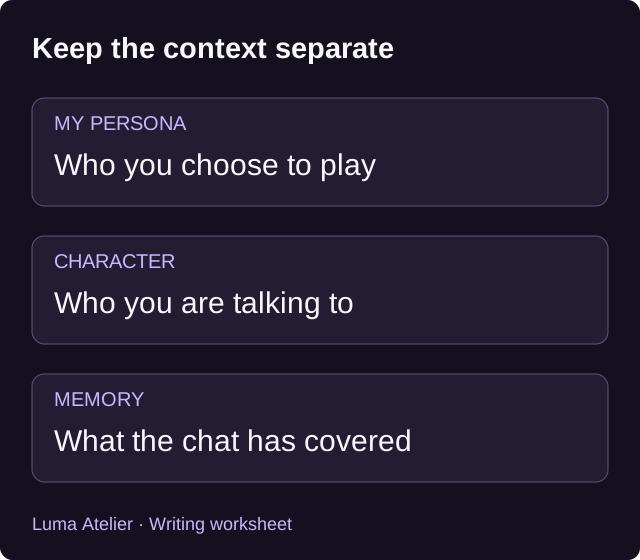
Your persona can say that you are a traveler. The conversation can establish that you lost a map yesterday. Memory may summarize that event, but it can omit or misstate details. Check the Memory panel when continuity matters and restate the scene if needed.
Clearing character memory keeps your messages and does not mean you have edited My Persona. Use the control for the information you want to change. Read the privacy notice for current data handling and provider limitations before adding sensitive information.
Sources and product details
Ready for the next step?